AI Didn't Kill Your Career. Standing Still Will
AI Didn't Kill Your Career. Standing Still Will
Sep 04, 2026
I was watching an interview with Andrew Ng, the co-founder of Google Brain and Coursera, and one thing he said stuck with me for days afterward.
He pointed out that universities move slowly. Not because the people teaching don't care, but because the system itself isn't built for speed. A new AI development shows up, and it can take a couple of years before that gets reflected in an actual curriculum, faculty trained up, committees approving, courses updated. By the time a course is ready, the thing it's teaching may already be a step or two behind where the field actually is.
That landed hard for me, because I think most of us grew up believing something different. Finish school, get the degree, and you're set. The learning phase ends, and the working phase begins.
I don't think that's true anymore. I'm not sure it was ever fully true, but it's especially not true now.
What I Actually Believe About This
Here's my honest take, not just repeating what I heard, not everything we learn in school translates directly into the real world. That's not a criticism of school. It's just the nature of how fast things move now, especially in AI. A curriculum can be well designed and still be teaching for a version of the world that's already shifting underneath it.
What Andrew said that I keep coming back to is this idea of context. Humans have years of lived experience, conversations, mistakes, and small moments of judgment that AI simply doesn't have access to. That context is what makes human judgment valuable, and it's not something a degree hands you on graduation day. It's built over time, through actually doing the work, adjusting, and paying attention.
So if a fresh graduate is only relying on what they learned in a classroom, they're missing the half of the equation that actually compounds.
Where I See It Differently
There was one part of what Andrew said that I don't fully agree with. He talked about AI being terrible for learning, pointing to research showing students score higher on homework when they use it, but retain far less long term because the AI ends up doing the thinking for them.
I understand where that's coming from, but I don't think "terrible for learning" is the right way to frame it. I think it comes down to how you're using it.
If you're asking AI to just hand you the answer so you can move on, sure, you're not going to retain much. But that's true of copying an answer from anywhere, not just AI. The difference isn't the tool. It's the context you give it and what you're actually asking it to do for you.
If you use AI to explain a concept back to you a different way, to quiz you, to challenge your reasoning, to help you think through a problem instead of just solving it for you, that's a completely different use of the same tool. The output only reflects the quality of the input and the intention behind it.
So I'd push back gently on the idea that AI itself is bad for learning. I think it's more accurate to say that most people haven't yet learned how to use it well for learning. That's a very different problem, and it's a solvable one.
I didn't finish college. For a long time, that was one of my biggest sources of frustration. There was a version of me that carried real regret about it, quietly wondering if I'd started my career already behind, already missing something everyone else had.
That regret hasn't disappeared completely, but it's been fading, slowly, the more I keep learning and adapting to where technology is actually heading now. Every time I pick up a new skill, apply a new AI tool, or figure something out that I didn't know six months ago, it chips away a little more at that old feeling of being behind.
To be clear, I'm not saying a diploma or certificate doesn't matter. It can open doors, and for a lot of paths, it's genuinely necessary. But it isn't a guarantee either. I've come to believe that success has less to do with the credential itself and more to do with whether you're persistent, willing to adapt, and resourceful enough to keep figuring things out. That's what actually opens the bigger doors, degree or no degree.
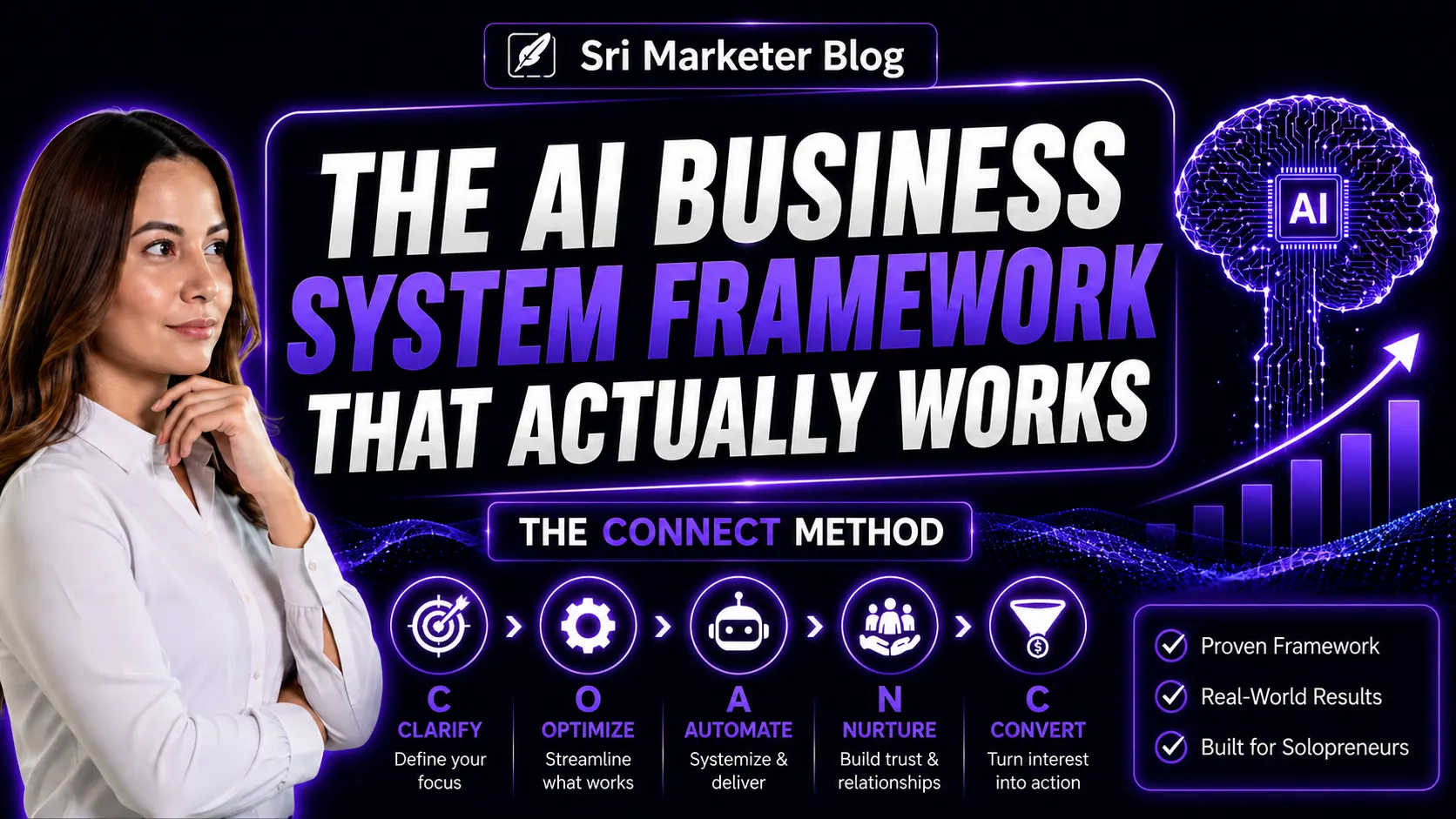
That's exactly why I built the CONNECT Framework. Not because I had it all figured out from day one, but because I kept connecting pieces together as I went. Marketing knowledge, systems thinking, AI tools, business lessons, all of it stacked up over time, not from a single course or a single degree.
If you're someone who already finished school and you're wondering whether you're behind because things have changed since you graduated, I don't think that's the right question to ask. The better question is whether you're still learning now.
Adapt, or Stay Comfortable. You Can't Do Both.
I think the businesses and the individuals who will actually thrive aren't the ones with the most credentials. They're the ones who stayed adaptable. Who kept upskilling. Who didn't treat their degree, or their first few years of experience, as the finish line.
AI is moving fast enough that standing still isn't neutral. It's actually falling behind, even if it doesn't feel that way day to day.
So my encouragement, to you and honestly to myself too, is this: keep learning past whatever formal education gave you. Keep upskilling. Stay curious about where things are headed, not just where they've been. That adaptability is what's actually going to carry you, degree or no degree.
Popular Posts











Sri Krsna Sagun
Marketing Systems Consultant & AI Strategist helping coaches, consultants & SMEs build AI-powered business systems.
Book a Free Call →
{
"@context": "https://schema.org",
"@type": "BlogPosting",
"headline": "AI Didn't Kill Your Career. Standing Still Will.",
"datePublished": "2026-09-04",
"author": {
"@id": "https://srimarketer.com/#person"
},
"publisher": {
"@id": "https://srimarketer.com/#business"
},
"image": "https://blog.srimarketer.com/[your-featured-image-filename]",
"url": "https://blog.srimarketer.com/post/ai-didnt-kill-your-career-standing-still-will",
"mainEntityOfPage": "https://blog.srimarketer.com/post/ai-didnt-kill-your-career-standing-still-will"
}