
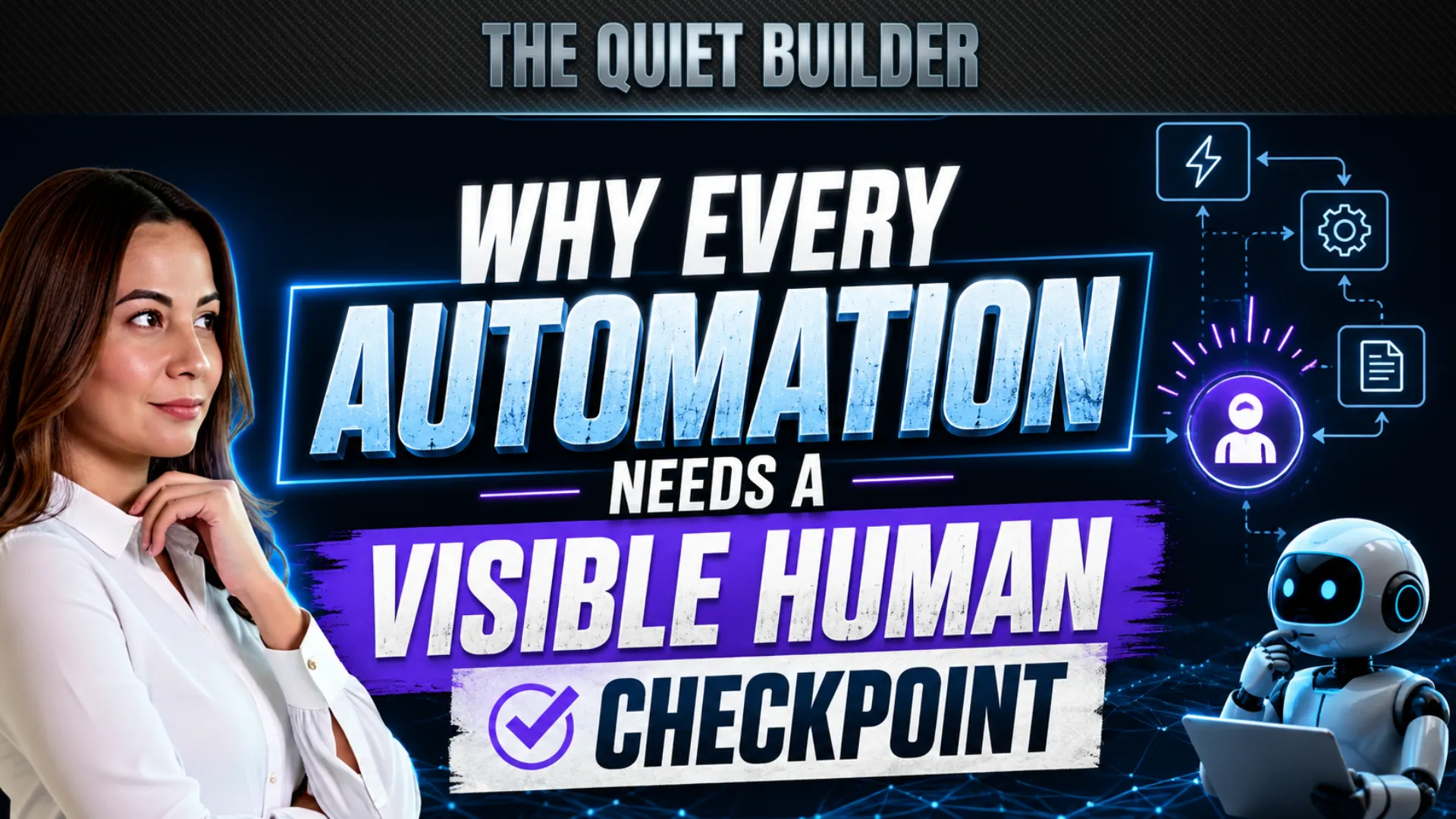
Why Every Automation Needs a Visible Human Checkpoint
Why Every Automation Needs a Visible Human Checkpoint
Jul 17, 2026
I used to think the goal of automation was to remove myself from the process entirely.
Set it up once, let it run, never touch it again. That's the dream everyone sells you, right? The fewer hands on the wheel, the more "systemised" you are.
I don't believe that anymore.
The moment I almost let something go out wrong
When I built out my Content Writer Agent system inside Claude, the setup that drafts my LinkedIn posts, newsletter editions, and blog content across The Quiet Builder and AI Insights with Sri, I designed it to move fast. Brief comes in, draft comes out, repurposed across three channels almost automatically.
It's a good system. It's also exactly the kind of system where things quietly go wrong if nobody's watching.
Early on, I realised that speed was solving the wrong problem. The risk was never "will this take too long to write." The risk was "will this go out sounding more advanced, more proven, or more finished than where I actually am." That's the one thing I'd promised myself I'd never do, overclaim results, borrow credibility I hadn't earned yet, or let a confident-sounding line slide past me just because it read well.
So before anything from that system goes live, it passes through what I call a Checker layer. Not a plugin. Not a Zapier step. Me... reading it as if I were the client deciding whether to trust this person, flagging anything that overstates traction, invents a stat, or sounds like a guru talking from a finish line I haven't crossed.
Why this checkpoint isn't a bottleneck
Here's what took me a while to accept: a checkpoint isn't the opposite of automation. It's what makes automation trustworthy enough to keep using.
Without it, I'm not actually saving time. I'm just moving the risk further downstream, to the moment a client reads something inaccurate and quietly loses trust in me.
That costs a lot more than the two minutes it takes me to review a draft.
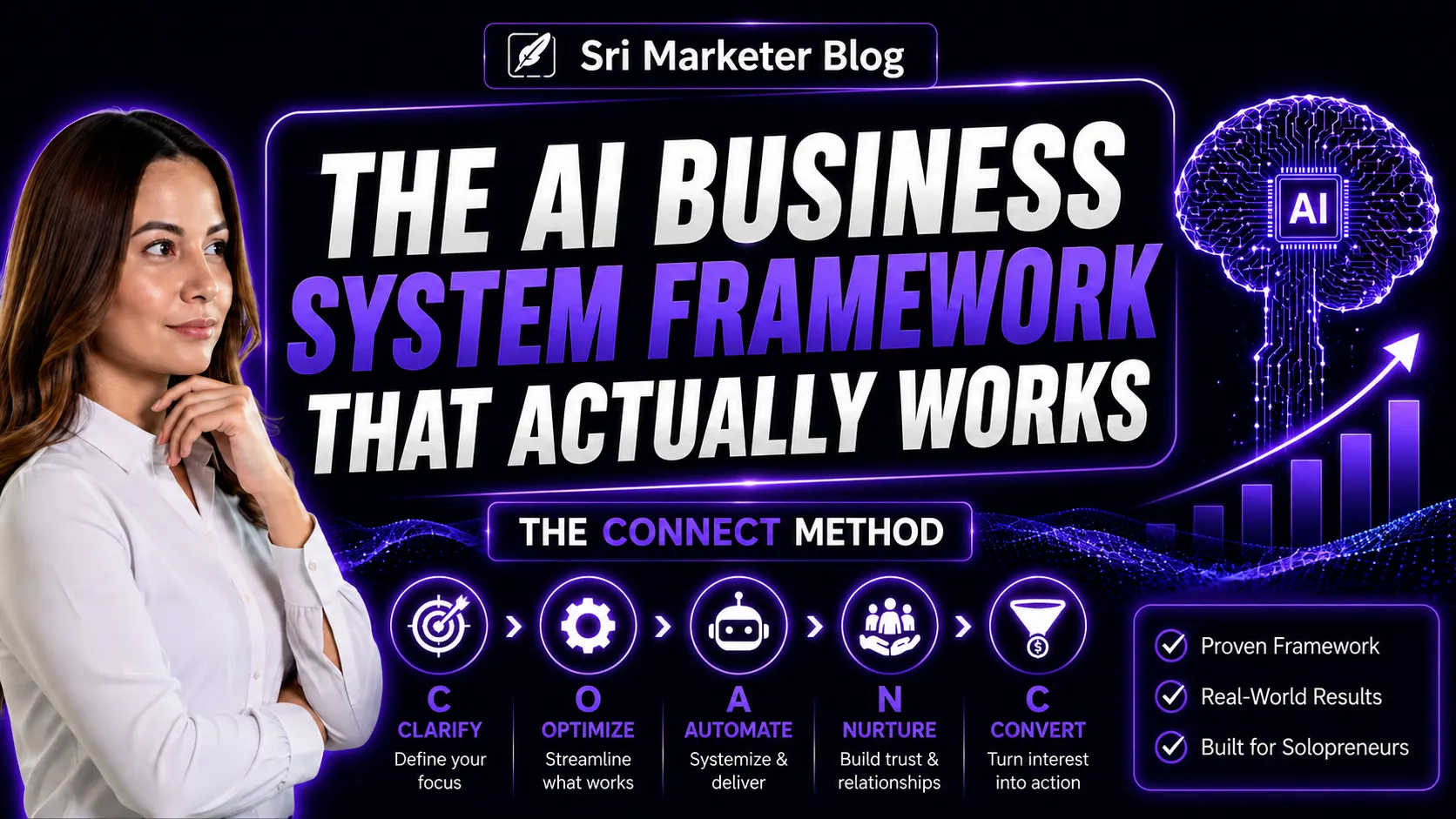
This is the same principle underneath the Connect Framework, if I'm honest. Clarify, Optimise, Automate, Nurture, Convert — automation sits in the middle, not at the end. It's never meant to be the last word. Nurture comes after it, and nurture is a human thing. You can't automate your way past the part where someone has to stand behind what was said.
What this looks like practically
For me, the checkpoint is simple and unglamorous:
Every piece of content — post, edition, blog draft — gets read by me before it's formatted or scheduled. I'm not proofreading grammar.
I'm asking one question: does this sound like where I actually am in my business right now, or does it sound like where I wish I was?
If it's the second one, it doesn't go out until I fix it.
I've applied the same instinct to other parts of my systems too — anywhere data moves without me looking at it (like automations I'm still testing between my content tracker and my publishing schedule), I build in a manual review step before I trust it to run unsupervised. Not because the tool is unreliable. Because I am the one whose name is on the output.
The takeaway, if you're building your own systems
If you're automating anything in your business — follow-ups, content, lead capture, onboarding — ask yourself where the checkpoint is. Not "does this save me time." Everything saves you time on paper. Ask "where's the moment a human still looks at this before it reaches a client."
If you can't answer that question, you don't have a system yet. You have a machine running unsupervised, and you're hoping it behaves.
Automation is supposed to protect your time so you can show up more fully where it matters — not replace the judgment that makes people trust you in the first place.
That's the whole point of building it this way, at least for me. I'm not trying to disappear from my own business. I'm trying to stop spending my time on the parts a system can hold, so I have more of it for the parts only I can.
If you're not sure where the gaps are in your own workflow — where things are running without anyone actually checking them — that's exactly what a Workflow Audit is for. It's usually the fastest way to see it clearly.
Popular Posts
























Sri Krsna Sagun
Marketing Systems Consultant & AI Strategist helping coaches, consultants & SMEs build AI-powered business systems.
Book a Free Call →