
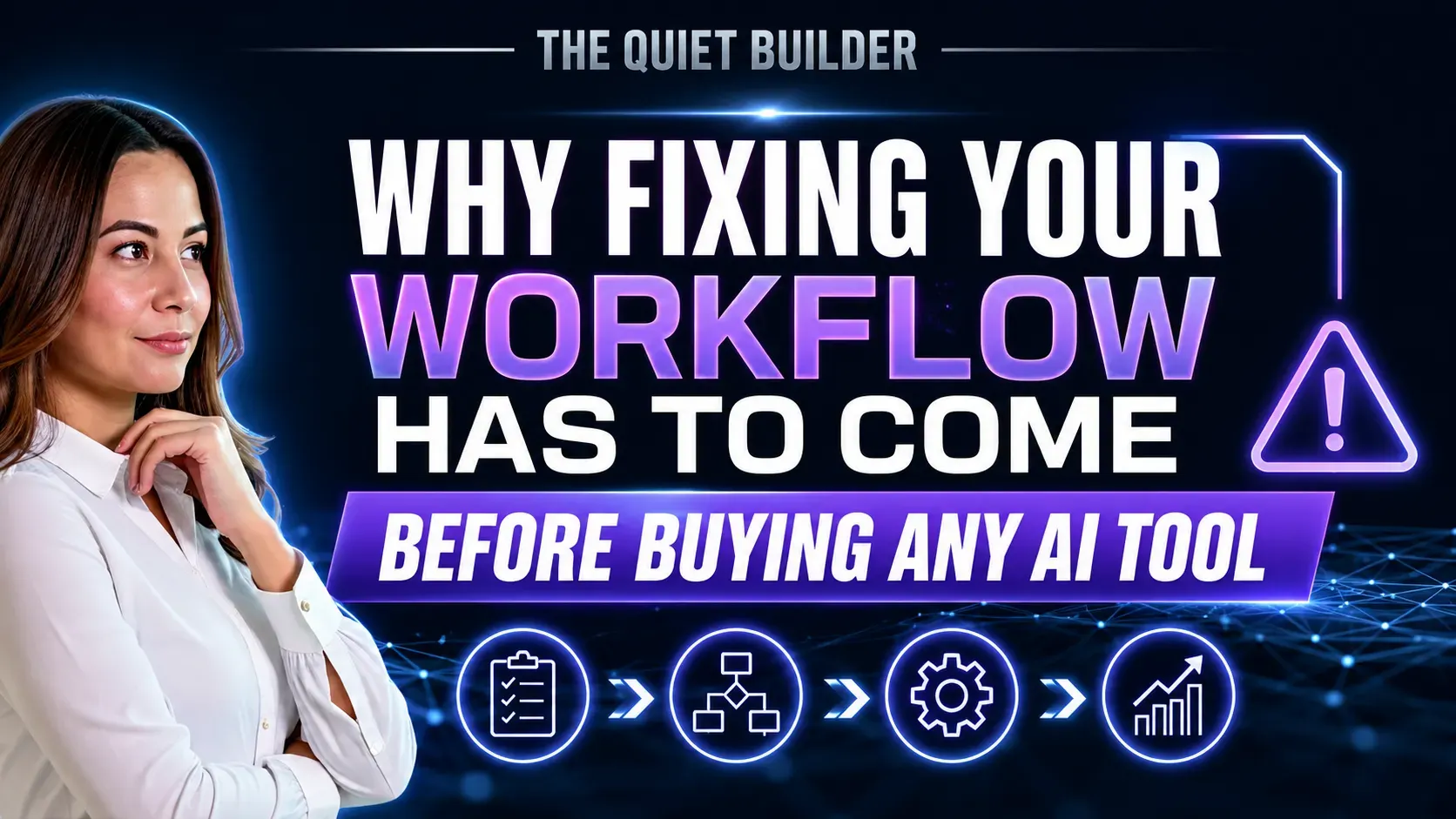
Why Fixing Your Workflow Has to Come Before Buying Any AI Tool
Why Fixing Your Workflow Has to Come Before Buying Any AI Tool
Jul 14, 2026
A few months ago, I could have told you exactly how many tools I had open on any given day to run my business. Too many. Different tabs for content, different apps for follow-ups, a notes app full of half-finished ideas about "systems I should build someday."
The tools weren't the problem. I was just pointing shiny software at a mess and hoping it would sort itself out.
It didn't. It never does.
The pivot that taught me this the hard way
When I repositioned my business around the Connect Framework, I could have started by picking automation tools first. That's the tempting move — you feel productive immediately. You connect an app, you set up a trigger, you feel like you're "building a system."
But I made myself do the unglamorous part first: I mapped out what I was actually doing, week to week, to run my content and client work. Not what I thought I was doing. What I was actually doing.
That's when I saw it. I was repeating the same manual steps across different platforms — drafting content in one place, reformatting it for another, manually tracking what was published where. None of that needed a fancier tool. It needed a clearer workflow.
This is the exact thing I now walk clients through in a Workflow Audit, because I lived it before I ever offered it as a service.
Automation only works on a workflow that already makes sense
Here's the part nobody tells you when they're selling you the next AI tool: automation doesn't fix a broken process. It just makes the broken process run faster and with less visibility into where it's breaking.
If your lead follow-up is inconsistent because you don't have a clear next-step for every stage of a conversation, automating it just means you're inconsistently following up faster. If your content process is scattered because you don't have a repeatable structure from draft to publish to repurpose, adding an AI writing tool just gives you scattered content, faster.
I only started building real automation — the kind that runs quietly in the background without me babysitting it — once I had mapped my blog-to-newsletter-to-LinkedIn pipeline clearly enough to know exactly which steps were repetitive, which needed my judgment, and which could be handed off entirely. The automation came after the map. Not before.
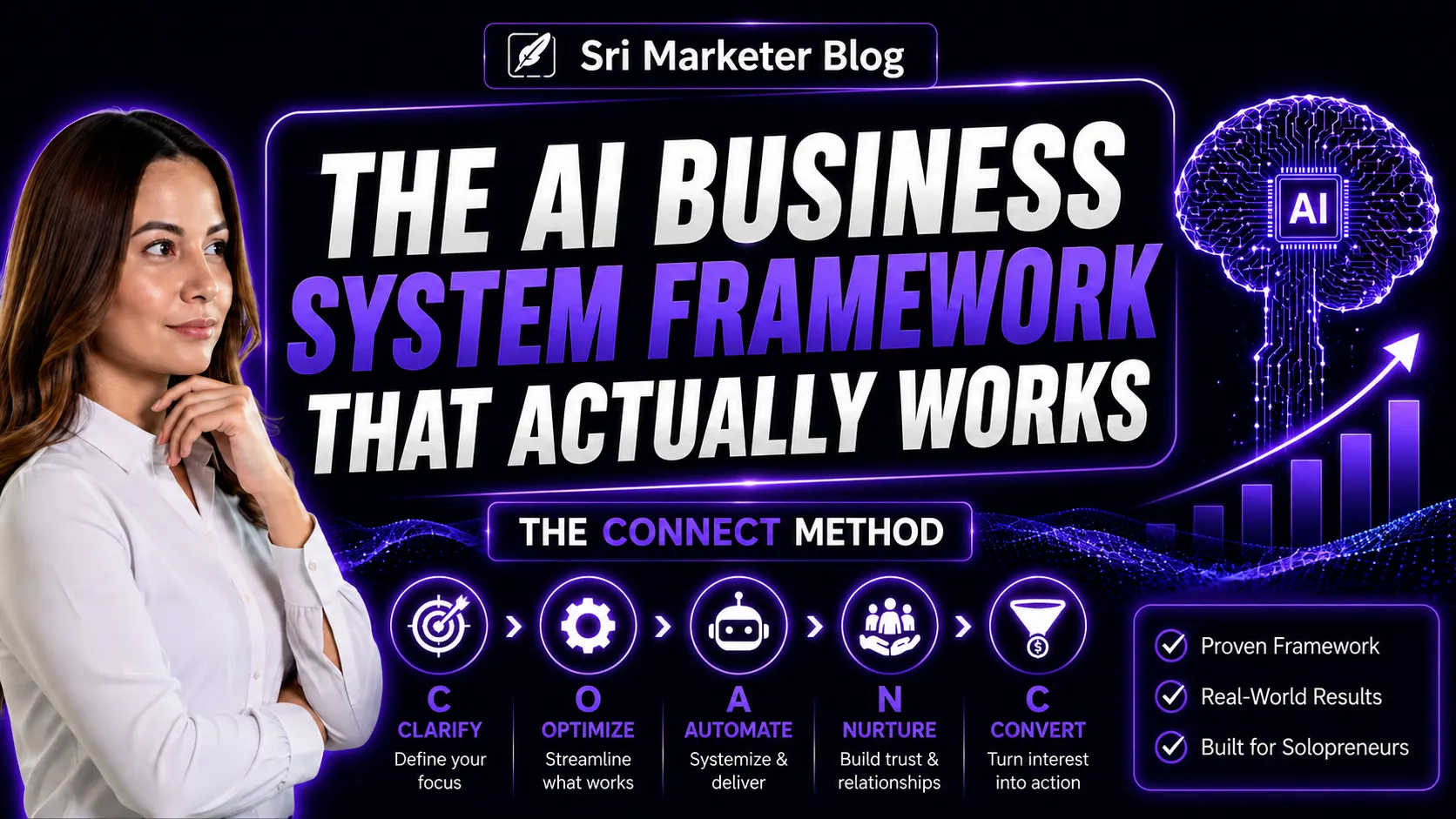
Clarify before you Automate
This is why Clarify comes before Automate in the framework I built my business on — it's not a clever ordering for marketing purposes. It's the actual order that works. You cannot automate clarity you don't have.
I think a lot of business owners buy tools because the tool feels like progress. Signing up for something, setting up an integration, watching a demo — it feels like movement. But movement isn't the same as a working system. A system means that when you step away, the essential things still happen the way they should.
I'm not going to pretend I have this fully solved. I'm still building out parts of my own infrastructure — refining how I want different content agents to work together, still testing automations before I trust them fully. Systems building isn't a finish line you cross once. It's ongoing maintenance, the same way a business itself is.
But the difference between now and a few months ago is that when something breaks, I know where to look. I have a map. Before, I just had tools pointed at chaos, hoping something would click.
If you're stuck doing everything manually
If you're reading this and recognizing your own week in it — too many tools, not enough clarity on what's actually slowing you down — that's usually the first sign it's time to map before you buy anything else.
That's exactly what a Workflow Audit is for. Not to sell you a stack of new software, but to show you, clearly, what's actually happening in your business right now — so that whatever you automate next actually holds up.
If you'd rather start smaller and self-paced, the Connect Framework Course at sklearningonline.com walks through this same Clarify-first approach at your own speed.
Either way — map first. Automate second. Everything else is just noise with a nicer interface.
Popular Posts




























Sri Krsna Sagun
Marketing Systems Consultant & AI Strategist helping coaches, consultants & SMEs build AI-powered business systems.
Book a Free Call →