How to Use AI to Turn Your Expertise Into Content
How to Use AI to Turn Your Expertise Into Content
Sep 07, 2026
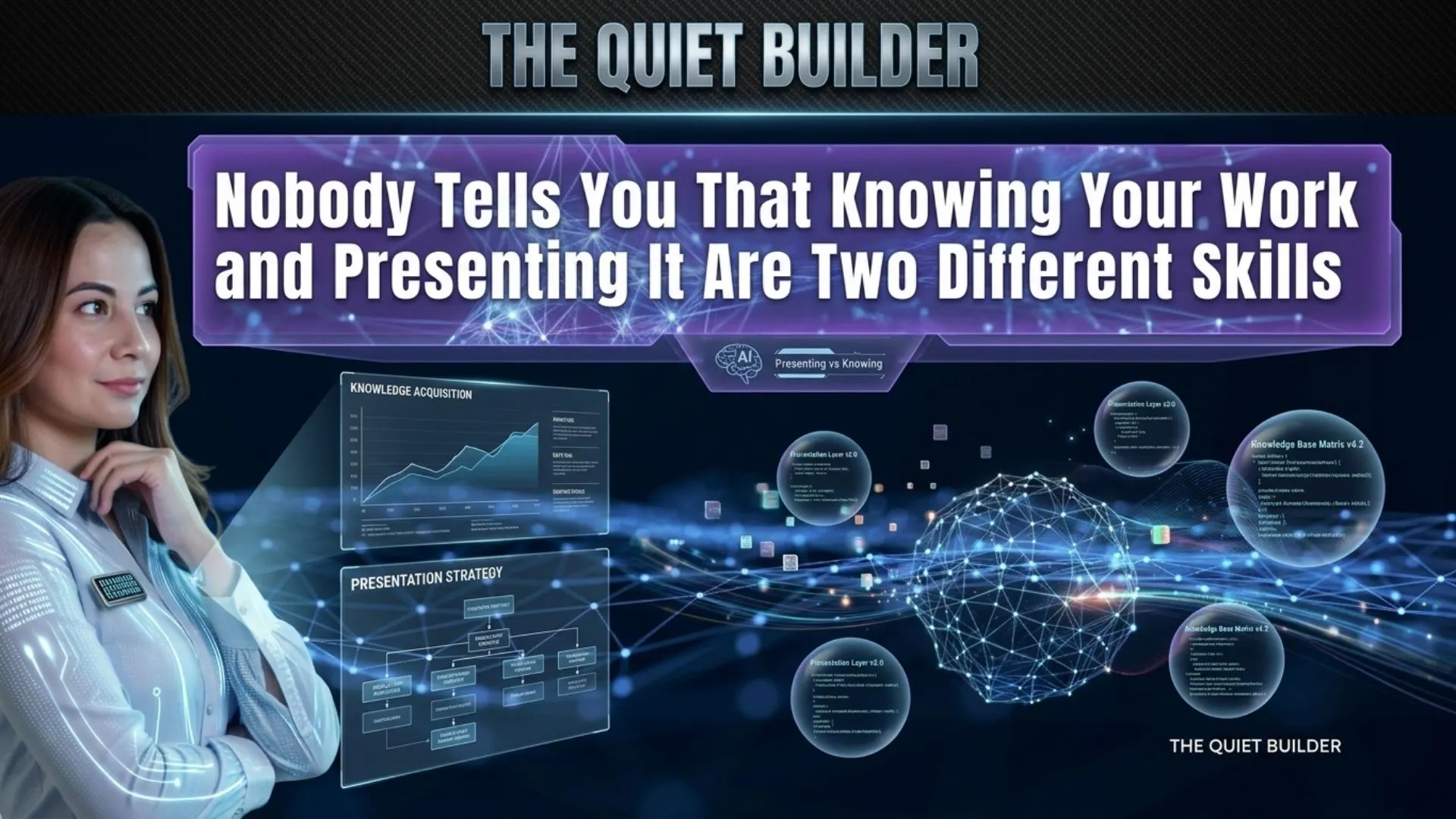
One of the biggest challenges I’ve had for years is not actually learning new things. It’s putting into words what I already know. I have a lot of ideas. I have the skills, the experience, the knowledge, and the workflows that I’ve built and practiced over the years. I know I have something to say. The problem is, when it’s time to actually explain it, present it, write about it, or talk about it in front of someone, I sometimes completely run out of words. I know what I want to say in my head, but somehow I can’t get it out in a way that makes sense.
This has happened to me so many times, including during interviews and client meetings. I could be doing something for years and understand exactly what I’m doing, but the moment someone asks me to explain it, I suddenly struggle to structure my thoughts. I start thinking about what to say next, whether I’m explaining it correctly, whether I’m using the right words, and before I know it, I’ve probably made myself sound like I don’t know anything about the subject. And that can be incredibly frustrating because I know that’s not true. I do have the skills. I do have the experience. I just don’t always know how to communicate them.
I think part of this comes from the way I’ve worked for so many years. I spend a lot of time at home, mostly with my computer, and I’m not constantly surrounded by people having conversations, presenting ideas, or talking through what they’re working on. I’m not practicing my speaking skills every single day. So when I suddenly need to present something, create content, or explain a process, it can take me a while to find the right words. There are moments when it comes naturally, but it’s not consistent.
And this is one of the reasons AI has become so useful to me.
I don’t use AI because I need it to give me the knowledge. The knowledge is already there. I don’t use it because I need it to create skills that I don’t have. The skills are already there too. What I need help with is taking everything that is already inside my head and structuring it into something that other people can actually understand.
So a lot of the time, I literally just dump my thoughts into AI. I’ll explain what I’m currently working on, the process I’m building, a workflow I’m testing, something I learned from a client, or an idea that has been sitting in my head for days. Sometimes it’s messy. Sometimes I jump from one thought to another. Sometimes I don’t even know what the main point is yet. I just know that there’s something there that I want to say.
Then AI helps me organize it.
And no, it doesn’t always get it right. There are plenty of times when I read what it gives me and say, “No, that’s not what I mean.” Then I explain it again. I add more context. I correct it. I tell it what feels wrong. Sometimes we go back and forth several times before I finally see the message I was trying to communicate in the first place.
That’s the part of AI that I find incredibly powerful.
It’s not replacing my expertise. It’s helping me access and communicate it.
For me, that distinction is important, especially now that AI makes it so easy to produce content. There’s a temptation to use AI to make ourselves look more knowledgeable than we actually are, or to have it create an entire piece of content without really contributing anything of our own. That’s not what I want. I don’t want AI to create an image of expertise that I haven’t earned. I want it to help me make the expertise I already have visible.
Because sometimes the problem isn’t that you have nothing to say. You actually have too much to say, but you don’t know where to start.
Maybe you have years of experience but struggle to explain what you do. Maybe you have ideas constantly running through your head but rarely turn them into content. Maybe you’re very good at solving problems for your clients, but when someone asks you to explain your process, you suddenly can’t find the right words. Or maybe, like me, you’re simply better at doing the work than talking about the work.
And I think AI can be incredibly useful in that situation.
You don’t have to ask AI to become the expert for you. You can bring the expertise to AI and use it as a tool to help you structure, clarify, organize, and communicate what you already know.
That’s how I’ve started looking at AI in my own content creation. It doesn’t give me the ideas. It doesn’t give me the experience. It doesn’t give me the skills. Those were already mine.
It helps me turn them into something people can actually see.
And maybe that’s one of the most valuable ways we can use AI—not to replace what makes us valuable, but to amplify it.
Because having expertise is one thing.
Being able to communicate that expertise so the right people can find you, understand you, and see the value in what you do is another.
For me, AI is helping me bridge that gap.
Popular Posts

















Sri Krsna Sagun
Marketing Systems Consultant & AI Strategist helping coaches, consultants & SMEs build AI-powered business systems.
Book a Free Call →