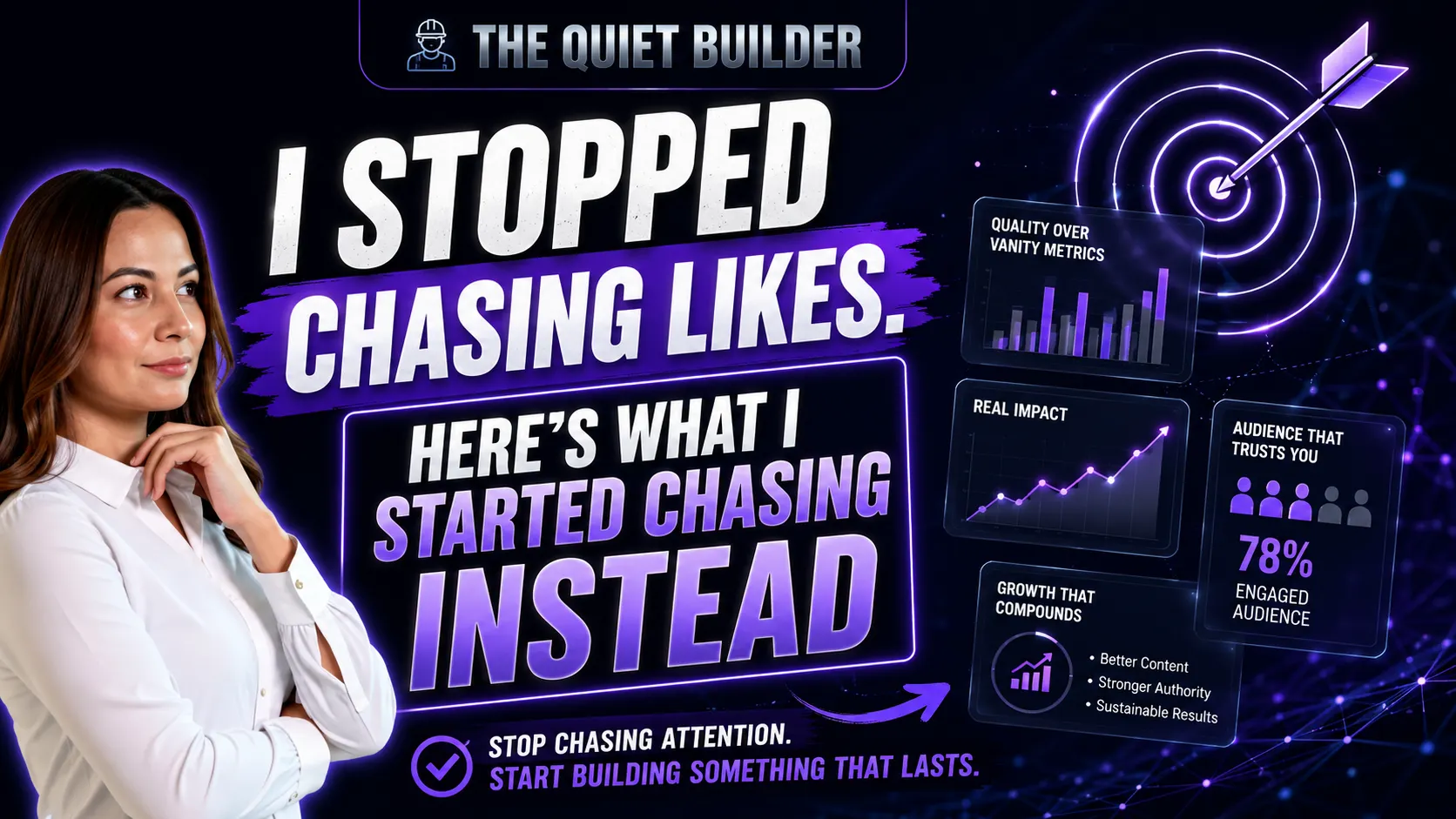
I Stopped Chasing Likes. Here's What I Started Chasing Instead
I Stopped Chasing Likes. Here's What I Started Chasing Instead
Jul 13, 2026
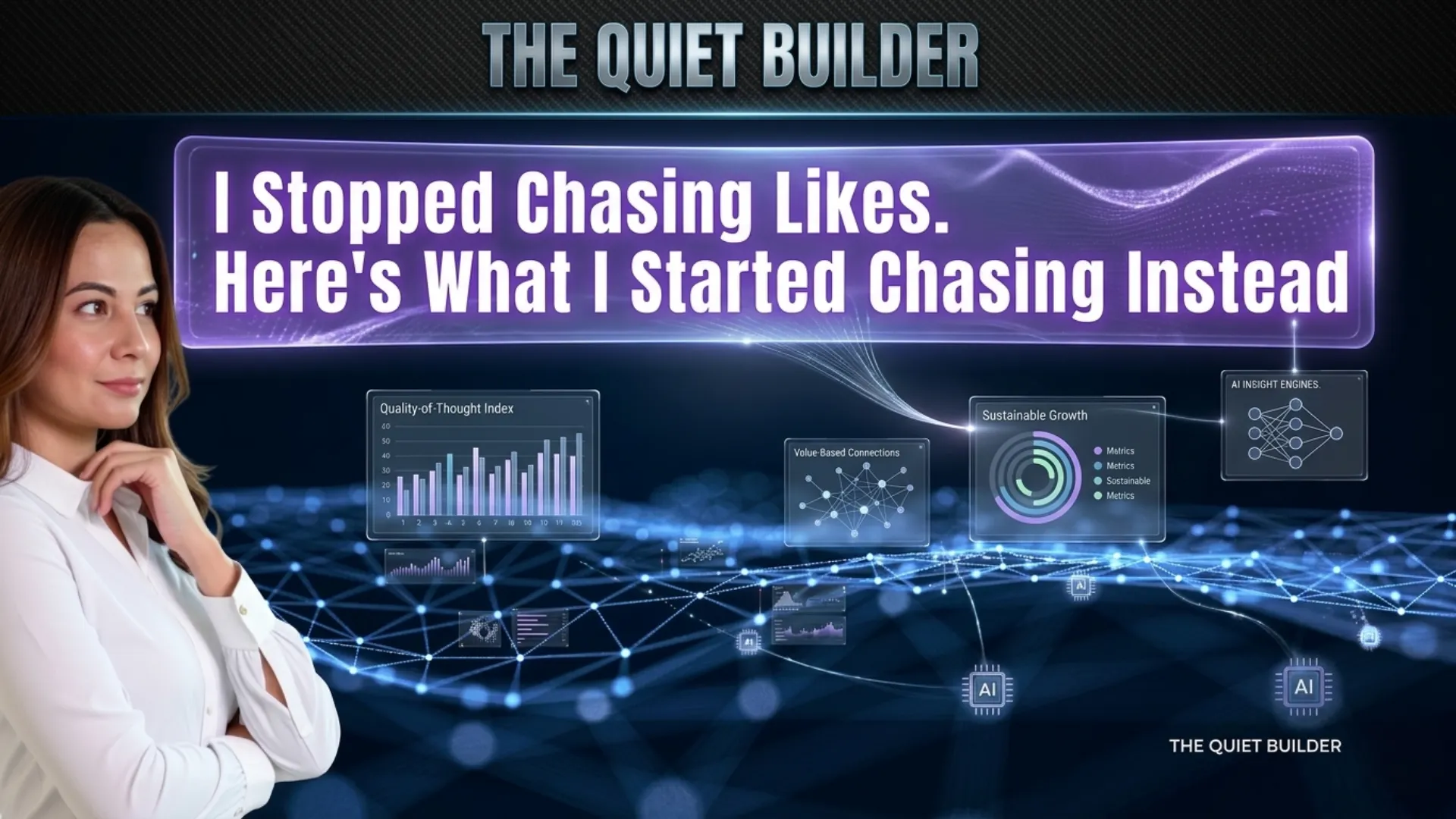
For months, I did what everyone else was doing on LinkedIn. Post, wait, refresh. Watch the like count. Feel good if it climbed fast, feel a little deflated if it didn't.
Then I noticed something strange. Some of my "quiet" posts — the ones with barely any reactions — were bringing in more profile visits and DMs than the ones that got 80 likes in the first hour. That didn't add up under the old rules I thought I understood.
So I did what I do with everything else in my business: I stopped guessing and went looking for the actual mechanism.
What's actually changed
The pattern that kept showing up, across LinkedIn's own guidance and the people who study this closely, was the same one: the platform isn't optimizing for a quick tap anymore. It's optimizing for attention that lasts. Dwell time — how long someone actually stays on your post before scrolling past — now carries real weight in whether that post gets shown to more people. Saves and shares, the "I want to come back to this" and "someone else needs to see this" signals, seem to count for a lot more than a like ever did. Comments, especially the kind where someone actually says something, still matter more than either.
I want to be upfront here: the exact multipliers you'll see floating around ("saves are worth 5x a like," "comments are worth 15x") come from independent analyses and creator research, not a number LinkedIn has published itself. I can't verify the precise ratio, and I'd treat any specific figure you read — including the ones in this post — as directionally useful rather than gospel. What I am confident about, because it lines up across every source I checked and matches what I'm seeing on my own posts, is the direction of the shift: passive taps matter less, sustained attention and "save this for later" behavior matter more.
That reframes what a "good post" even looks like.
What I changed because of it
A few things shifted in how I write and post, almost immediately:
I stopped writing for the scroll-past. I used to obsess over the hook line getting a reaction. Now I think about whether someone would actually finish reading — which means shorter paragraphs, one idea per post, and cutting anything that doesn't earn its place in the first three lines.
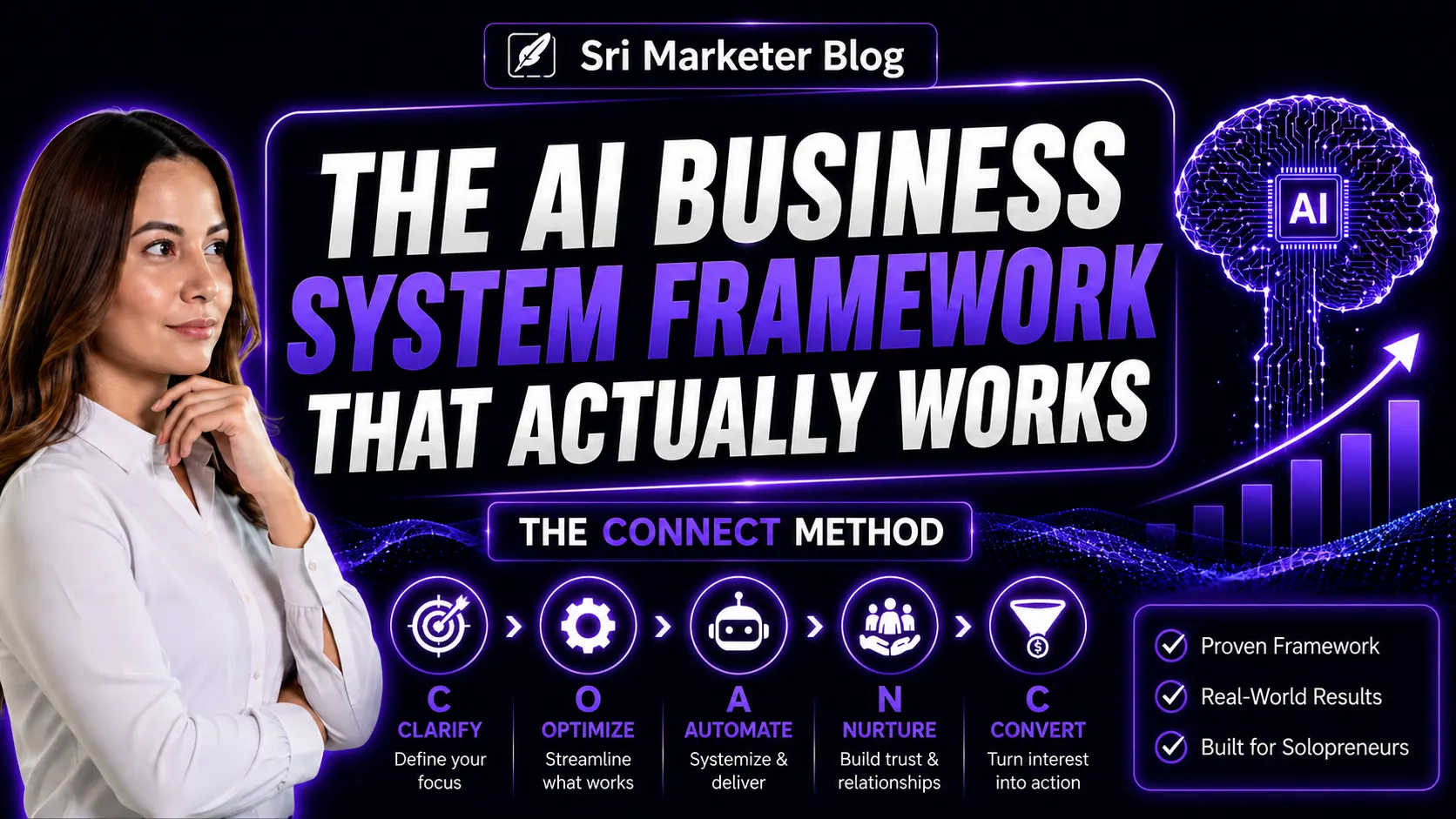
I started writing things worth saving. A framework breakdown, a checklist, a "here's exactly how I did this" post — those are the ones people bookmark to come back to. A vague motivational line isn't. This is part of why I lean on frameworks like Connect (Clarify, Optimize, Automate, Nurture, Convert) in my content — it gives people something structured enough to want to save, not just scroll past and forget.
I moved links out of the post body. Whether or not the exact reach penalty numbers you see quoted are accurate, the pattern is consistent enough that I now put links in the first comment or skip them in favor of a soft CTA instead. Keep the post itself readable start to finish, on the platform.
I stopped watching the like count. Genuinely. I check saves, comments, and profile visits now. Likes tell me almost nothing about whether I actually helped someone.
None of this was a strategy I sat down and mapped out in a slide deck. It came from doing the same thing I tell my clients to do with their own workflows: notice what's actually happening, not what you assume is happening, and adjust the system based on that.
The takeaway, if you're posting consistently and it feels like shouting into a void
Don't panic about your like count. Look at what's happening after someone reads your post — are they commenting with something real, saving it, clicking into your profile? Those are the signals worth building content around now.
And if you're not sure whether your content is actually landing versus just performing, that's usually the first thing I look at with a client during a Workflow Audit - not the vanity numbers, but where the actual friction and drop-off is happening. If that's something you've been wondering about your own content, or your business in general, it might be worth a look.
If you want the tactical, week-by-week version of things like this — what's actually working right now versus what's just noise — that's what I write about over in AI Insights with Sri.
Popular Posts














Sri Krsna Sagun
Marketing Systems Consultant & AI Strategist helping coaches, consultants & SMEs build AI-powered business systems.
Book a Free Call →