How to Turn Your Past Jobs and Skills Into Online Opportunities
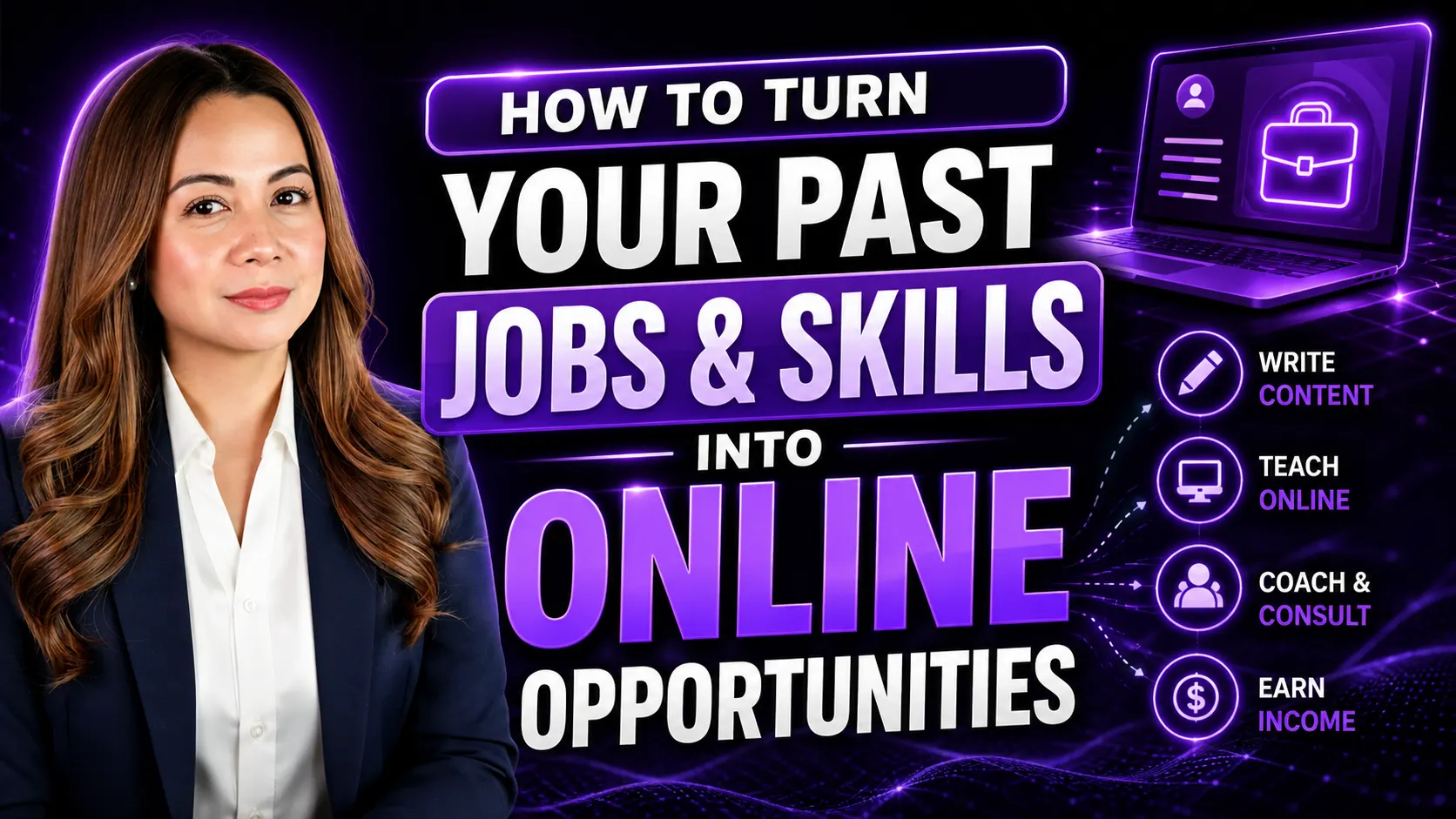
How to Turn Your Past Jobs and Skills Into Online Opportunities
Oct 12, 2026
Maybe you've thought about starting something online. You know you have skills and experience that could be worth something. But every time you sit down to begin, you hit the same wall. Where do I even start?
Here's something that took me years to believe. You probably have more to offer than you think. It just hasn't been put together yet.
I know that feeling well. I've lost a job. I've lived paycheck to paycheck. I've pivoted more times than I can count. For a long stretch I was busy but not productive, and skilled but not earning from it.
I had pieces. Marketing work. AI tools I taught myself late at night. Years of working remotely while raising my family. But they felt scattered. They didn't look like a direction.
The turning point came when a long-term client told me he needed to step back, and that I should build something for myself. I had the skills. What I didn't have was a way to see how they fit together.
So I started writing everything down and looking for the connections. That simple exercise eventually became a free guide called Connect the Dots.

Why "just pick something" doesn't help when you're stuck
When you feel lost, most advice tells you to choose a niche or copy what's working for someone else.
That skips a step. You can't choose well from a list you've never written down.
In my CONNECT Framework, this first step is called Clarify. Before you plan, build, or automate anything, you need to see what you're actually working with. Don't plan around pieces you haven't looked at yet.
What the Connect the Dots guide is
It's a free, step-by-step guide that takes about 20 minutes. You answer five sets of simple questions, and by the end you have your skills and experiences in one place, a short sentence describing what you could offer and to whom, and one small step to take this week.
You can type your answers right on the page or use a notebook if you prefer writing by hand. Your answers stay on the page and aren't sent anywhere. When you're done, you can save them as a PDF.
The five steps, and why each one matters
1. Gather your dots
Your dots are everything you've done, learned, or lived through. Jobs you've had, paid or unpaid. Skills you picked up on your own. Things people often ask you to help with.
The guide also asks about hard seasons you got through and what they taught you. Don't skip this one. Some of my most useful dots came from the hardest years, because that's where I learned to keep moving even when I didn't have clarity yet.
Don't filter at this stage. Just write.
2. Notice your energy
Not every dot belongs in your next chapter. Go back to your list and sort it honestly into what gives you energy and what drains you.
Being good at something isn't the same as wanting to do it for years. Your next step is usually hiding in the energy box.
3. Connect them
Pick two or three dots from your energy list and fit them into one sentence:
When I combine ___ and ___, I could offer ___ to ___.
Try it a few times with different combinations. One version will feel more like you than the rest.
When I did this for myself, one version looked something like this: when I combine my marketing experience and my habit of figuring out new AI tools, I could offer simple systems to small business owners who feel overwhelmed by tech. That sentence became the start of my business.
4. Picture who you could help
The people you're best placed to help are often the ones standing where you used to stand.
The guide asks who they are, what they're struggling with, and what you wish someone had told you back then. That last question is often where your message comes from.
5. Take one small step
Clarity grows when you act on it. You don't need a big plan. Tell one person about your idea, write one post, or learn one new skill. Just one, this week.
Take it further with AI
Once you've saved your answers as a PDF, you can upload them to ChatGPT or Claude and use the ready-made prompt on the guide page.
I wrote that prompt carefully. It asks the AI to look for patterns in your answers, suggest a few realistic ideas from small to big, and use only what you wrote. It also tells the AI to ask you questions before giving suggestions if something is unclear.
That matters. AI can't properly help with a life it doesn't understand. When you give it your own answers first, it has real context to work from instead of guessing.
Still, you know your life best. Keep what feels true and let go of the rest.
What this guide won't do
I want to be honest about this part. The guide won't hand you a business plan, and it can't promise that your first idea will work.
There's no secret formula for figuring out your next step. Mine took several pivots, and I'm still building. What the guide gives you is a clearer starting point than a blank page, and something to come back to whenever you feel stuck. You'll likely notice new connections each time.
Your past isn't scattered
For a long time I thought my experiences were random. Looking back, I was collecting dots the whole time. I just hadn't connected them yet.
If you're in that place right now, set aside 20 quiet minutes and start the free Connect the Dots guide.
If it helps, I'd love to hear what you discover. You can follow my journey on TikTok at @sri_krsna or find more of my work at srimarketer.com.
Popular Posts














Sri Krsna Sagun
Marketing Systems Consultant & AI Strategist helping coaches, consultants & SMEs build AI-powered business systems.
Book a Free Call →
{
"@context": "https://schema.org",
"@type": "BlogPosting",
"headline": "How to Turn Your Past Jobs and Skills Into Online Opportunities",
"description": "Want to start something online but don't know where to begin? Use this free 20-minute guide to turn your past jobs and skills into online opportunities.",
"image": "https://images.groovetech.io/I1FbCBW0nfK2gqKi_IZeGUStzD2dXmzMN9nPuFsUuC0/rs:fit:0:0:0/g:no:0:0/c:0:0/aHR0cHM6Ly9hc3NldHMuZ3Jvb3ZlYXBwcy5jb20vaW1hZ2VzLzVmYjRiY2ZlMjEyMjU0MDA3NTMzZDYyZi8xNzkxMTg2NjUxX2Nvbm5lY3R0aGVkb3Rzb2dpbWFnZS5wbmc.webp",
"datePublished": "YYYY-MM-DD",
"author": { "@id": "https://srimarketer.com/#person" },
"publisher": { "@id": "https://srimarketer.com/#business" },
"mainEntityOfPage": "https://blog.srimarketer.com/post/turn-past-jobs-and-skills-into-online-opportunities",
"url": "https://blog.srimarketer.com/post/turn-past-jobs-and-skills-into-online-opportunities"
}