What is Brand Audit, and Why Does It Matter? (I Ran One on My Own Business)
What is Brand Audit, and Why Does It Matter? (I Ran One on My Own Business)
Jul 22, 2026
I run a marketing systems consulting practice. I built the CONNECT Framework. I've spent months fixing my SEO, my schema, my page speed. And I still didn't have a clear answer to a basic question: what does my brand actually say about me before I say a word?
So I ran a brand audit on myself.
What a Brand Audit Actually Does
Most business owners think "branding" means a logo and a color palette. It's not that — or at least, it's not only that.
A real brand audit walks you through a series of exercises that look at:
- Your brand identity — the mission, vision, and unique value proposition you're actually communicating, whether you meant to or not
- Your brand archetype — the underlying personality your content, tone, and positioning project to the outside world
- Your competitive landscape — where you genuinely differ from the people competing for the same clients, and where you're accidentally blending in
- Your ideal customer profile — who you're actually built to serve, based on evidence, not assumption
- Your visual identity — fonts, colors, and design language, and whether they're reinforcing or undercutting your positioning
- Your content strategy — what you should actually be publishing, and why
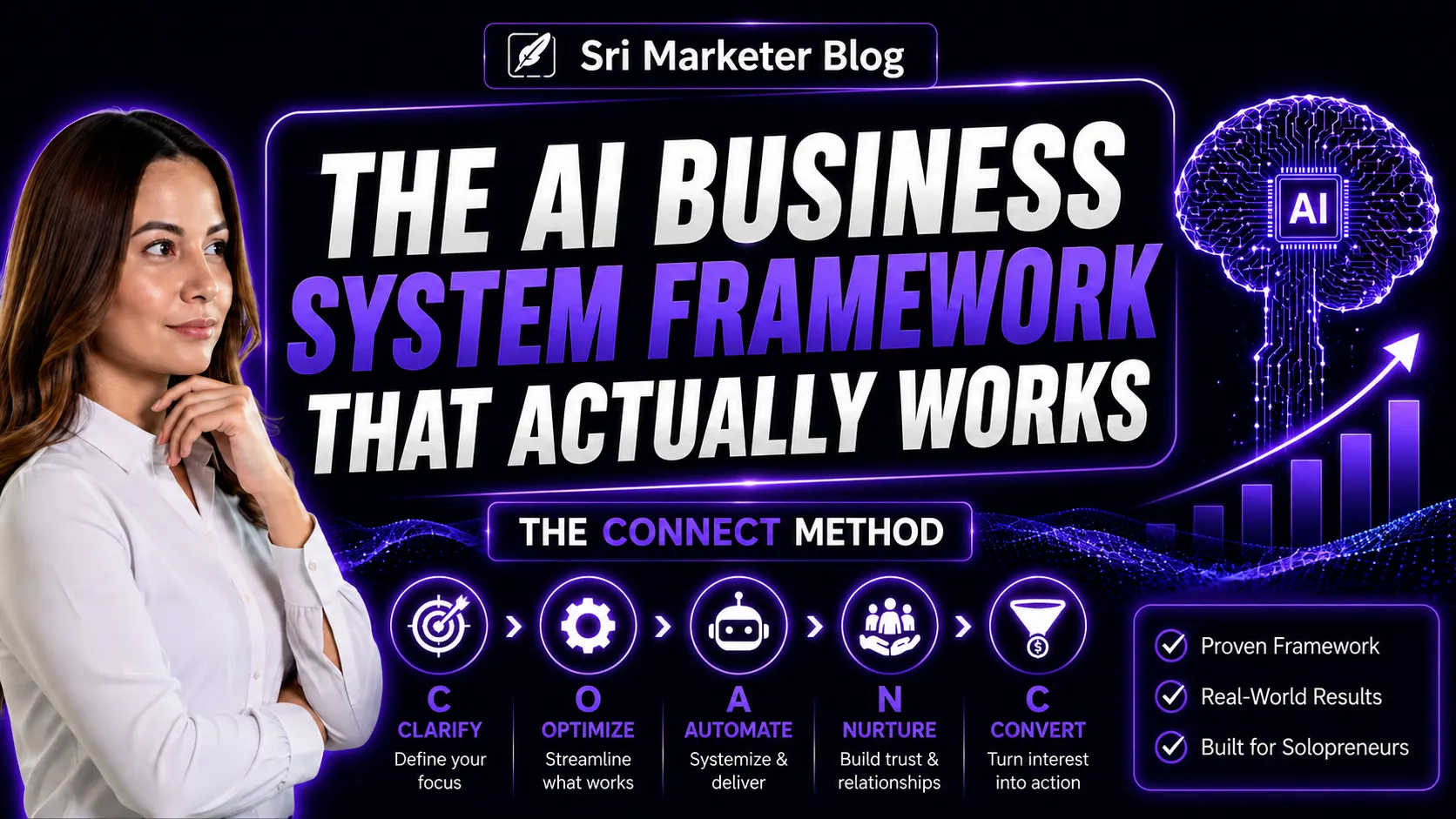
This is the Clarify step of my own CONNECT Framework, applied to branding specifically. Before you optimize or automate anything, you need an honest picture of what's actually there.
What I Learned Running One on Myself
A few things surprised me.
First, one of the exercises correctly identified my brand archetype as The Ruler — a brand built around order, structure, and control over chaos. That tracked. My entire business exists to take a chaotic, manually-run operation and turn it into a system. But it also flagged a real risk: an archetype like that can tip into feeling too authoritative, too distant, if I'm not careful to keep the empathy and relatability in my actual voice. That's a genuinely useful tension to know about before it shows up as a complaint from a client, not after.
Second, it surfaced a value I hadn't explicitly named but have always operated by: honesty. Not politeness — honesty. Naming a skill gap instead of overselling it. That's something my own website copy didn't make obvious, but it's core to how I actually work.
Third — and this one stung a little — it caught a factual error sitting live on my own website. A number in my FAQ that was simply wrong, and had been for a while. I hadn't caught it. A structured audit did. That alone justified doing it.
Why This Matters for Any Business, Not Just Mine
Whether you're a solo consultant, a coach, or you're running a small business with a physical product, the same blind spots apply:
- You know your business from the inside, which makes it hard to see how it actually reads from the outside
- Errors and outdated claims sit quietly on your website because nobody's specifically looking for them
- Your competitors are easy to name in your head but harder to actually analyze side-by-side
- Your "brand voice" is often more accidental than intentional — shaped by whoever wrote the copy on whatever day, not by a deliberate personality
A brand audit forces all of that into the open. It's not about vanity — a nicer-looking website. It's about finding the gap between how you think you're coming across and how you're actually coming across, and closing it.
What This Looks Like in Practice
If you run this kind of audit on your own business, here's roughly what the exercises are looking for:
- A clear brand mission, vision, and USP — written down, not just felt
- An honest SWOT — including weaknesses you'd rather not admit
- A real competitor comparison — not "who I think my competitors are" but a structured look at how you actually differ
- A validated ideal customer profile — pain points, goals, and decision-making style, grounded in evidence
- Consistent visual and verbal identity — so your website, your LinkedIn, and your actual conversations with clients all sound like the same person
- A content roadmap — so you're not starting from a blank page every week
Where I Can Help
If you've read this far and you're realizing you don't actually know what your brand is currently signaling to the people you want as clients — that's exactly the gap my Workflow Audit and AI Content System work is built to close.
If you'd rather work through this at your own pace first, SK Learning Online has courses built around the same CONNECT Framework — a lower-commitment way to start applying this before booking a 1:1 audit.
I'm not going to pretend a brand audit fixes everything on its own. It's a diagnostic, not a solution. But you can't optimize or automate what you haven't first clarified. That's the whole premise of the CONNECT Framework — Clarify before anything else.
If you want a second, more objective set of eyes on how your business is actually positioned — not how you think it's positioned — I'd be glad to help you work through it. Reach out, and let's start with the audit.
Popular Posts






















Sri Krsna Sagun
Marketing Systems Consultant & AI Strategist helping coaches, consultants & SMEs build AI-powered business systems.
Book a Free Call →