Yes, I Used AI to Write This. No, That Doesn't Make It Fake.
Yes, I Used AI to Write This. No, That Doesn't Make It Fake.
Jul 31, 2026
Go ahead. Say it.
"This was written by AI."
You're right. I used AI to help write this post. I also use AI to help structure my content calendar, repurpose a video into five formats, and clean up my first drafts. If that's disqualifying, then I guess this whole post is disqualified before you've finished the first paragraph.
Here's what I'd ask you to sit with instead: what exactly do you think makes content real?
The Assumption Hiding Inside "That's Just AI"
When someone tags content as "fake" because AI touched it somewhere in the process, they're usually pointing at the wrong thing. The tool isn't what makes content hollow. The absence of a real person behind it is.
There's a difference between AI writing something instead of you, and AI helping you say something you already know, faster and cleaner than you could alone. One replaces you. The other extends you. Confusing the two means punishing people for using a tool well, while giving a pass to anyone who writes slop by hand.
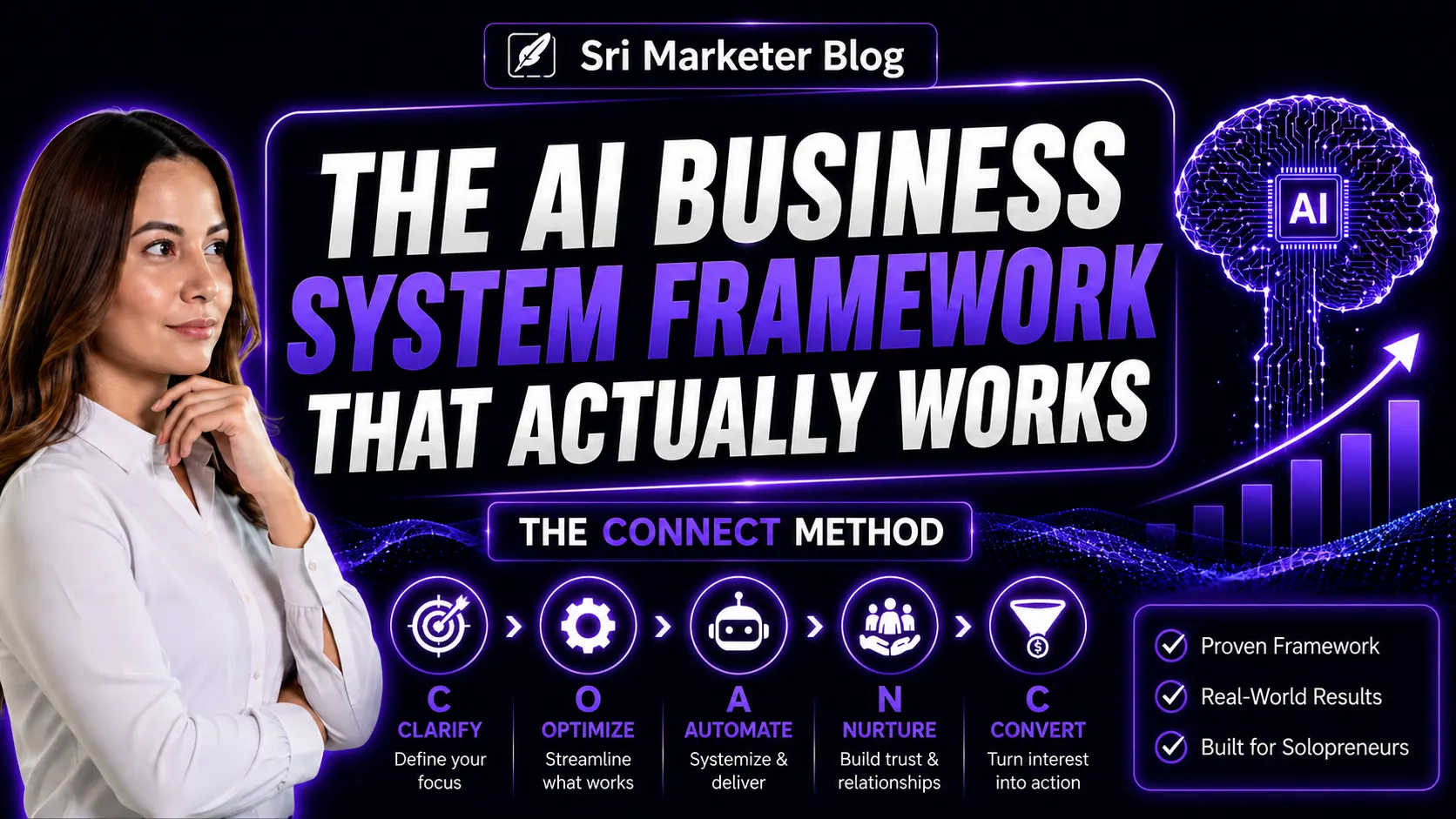
I didn't ask an AI tool what I think about client audits, marketing systems, or the CONNECT Framework. I couldn't, it doesn't know. Those ideas came from actually doing the work: running real audits, hitting real dead ends, finding the same broken pattern across different businesses. AI helped me get that off my head and onto the page in a form worth reading. It didn't generate the insight. I did. It never could have none of that experience exists anywhere for it to draw from except in my own head.
Where the Skepticism Comes From And Why It's Not New
I get why the instinct exists. Somewhere out there, plenty of AI content genuinely is hollow recycled talking points, no point of view, nothing a real person actually tested or lived through. That content deserves the skepticism it gets.
But the "if AI touched it, it's fake" reflex isn't really about that. It's a pattern that shows up every time a new tool makes something easier to produce. Photography got accused of not being "real art" next to painting. Digital tools got the same treatment against traditional design. Spell-check and grammar tools got quietly used by nearly everyone while still being treated as a kind of cheating if you admitted to it out loud.
The tool changes. The reflex doesn't.
There's actually research backing this up directly. Work looking at how audiences judge AI-assisted creative work found that people tend to rate it as less authentic and less effortful once AI involvement is disclosed, but that perception shifts significantly when the human's creative control and judgment are made clear alongside it. In other words? it's not the AI that determines whether something feels authentic. It's whether a real person's judgment is visibly still in the driver's seat.
What I Actually Use AI For (And What I Never Hand Off)
Since I'm making the distinction, here's the honest breakdown of where the line sits in my own work:
AI helps me with:
- Structuring a rough idea into a clear draft
- Turning one piece of content into multiple formats, a recording into an article, a framework into a carousel
- Speeding up the mechanical parts: formatting, first-pass editing, repurposing
AI never touches:
- What I actually believe about a client's situation
- The specific pattern I noticed across real audits I ran myself
- Strategic judgment calls - what to prioritize, what a business actually needs, what's worth building
- My own track record, my own mistakes, my own client experience
If you stripped the AI-assisted formatting out of everything I publish, the ideas underneath would be identical. That's the test worth applying not "did a tool touch this," but "if you removed the tool, would there be anything left?" For a lot of what gets rightly criticized as hollow AI content, the honest answer is no. For content built the way I've described here, there's a whole business, a whole journey, and a lot of hard-earned pattern-recognition sitting underneath it, tool or no tool.
And Now You're Using an AI Face Too?
Yes. Let's address that one directly, since it's usually where the sarcasm gets sharpest.
I use AI in my images and videos too. Not to fake a life I don't have, and not to trick anyone into thinking a real camera crew showed up. I use it because it solves a problem that has nothing to do with deception and everything to do with access.
Plenty of people with genuinely valuable things to say never say them publicly, because the barrier isn't the idea, it's the camera. Filming yourself, on repeat, week after week, is a specific kind of discomfort that has nothing to do with whether what you know is worth hearing. Some of the most useful insight I've come across in this industry sits permanently unpublished, because the person who has it isn't willing to put their face on a lens to share it.
AI-assisted video and image content isn't a scam wrapped around an empty message. It's a channel. The same way writing is a channel, and speaking on a podcast is a channel. The voice behind it, the actual message, the actual expertise is still mine, or still yours, whoever's using it. AI didn't invent what's being said. It just removed the specific obstacle that was keeping it unsaid.
That's a very different thing from AI content designed to impersonate someone, mislead an audience, or manufacture false authority out of nothing. The difference isn't the technology. It's whether there's a real person, with real expertise, standing behind what's being delivered, same test as the writing.
If you're an introvert with something worth sharing and the camera has been the thing standing between you and actually sharing it, that's not a personal failing you need to push through by brute force. It's a solvable channel problem which is exactly what my AI Content System is built around, including AI avatar content built from your own appearance and voice, so the barrier disappears without the message changing at all.
The Real Question Isn't "Did You Use AI"
It's "did you earn the right to say this."
I built my business by living through the overwhelm of learning a dozen AI tools, applying them badly, applying them better, and eventually connecting the dots into something structured enough to teach other people. That journey is the actual content. AI is just one of the tools I use to get it out of my head faster.
If you're building something the same way using AI to move faster without letting it replace the judgment and experience that's actually yours, that's exactly what my AI Content System is built to help you do. Not to make you sound like a robot. To help you say what you already know, consistently, without burning your entire week doing it manually.
It's part of the Optimize stage of the CONNECT Framework because once you're clear on what you actually do, the next step is making sure you can say it efficiently, not disappear trying to prove you didn't use a tool to help.
Use the tool. Keep your point of view. That's the whole argument.
For more on how disclosure and creative control affect perceptions of AI-assisted work, see this research on AI as a tool in creative production.
Popular Posts


















Sri Krsna Sagun
Marketing Systems Consultant & AI Strategist helping coaches, consultants & SMEs build AI-powered business systems.
Book a Free Call →